


KINDERGARTEN
By the 2028 academic year, Beaconhouse Yamsaard Rangsit School is committed to promoting early childhood health through standardized nutrition from a Safe Food School canteen (Q Canteen). We foster holistic development in young children through joyful and engaging learning experiences, cultivating essential social and emotional skills grounded in contemplative education (Jit Sueksa) and age-appropriate Executive Functions (EF). We aim to inspire innovation and effective communication skills, develop activities linking culture, the environment, and community learning resources, and build strong partnerships with parents and networks to enhance life skills—all supported by a management system that responds to individual differences.
BASIC EDUCATION
By the 2028 academic year, Beaconhouse Yamsaard Rangsit School is committed to ensuring that students maintain good health and receive nutrition that meets the standards of a Safe Food School canteen (Q Canteen). We empower students with comprehensive future-ready skills through the promotion of lifelong learning, environmental stewardship, and sustainable development. Students are encouraged to embrace cultural exchange—both Thai and international—while developing into responsible global citizens. Furthermore, we build strong partnerships with parents and community networks to enhance essential life skills, supported by a management system that responds to individual differences and fosters collaborative engagement with all stakeholders.
To promote a balanced four-fold development in young children: physical, emotional, social and moral, citizenship and Thai identity, and intellectual development.
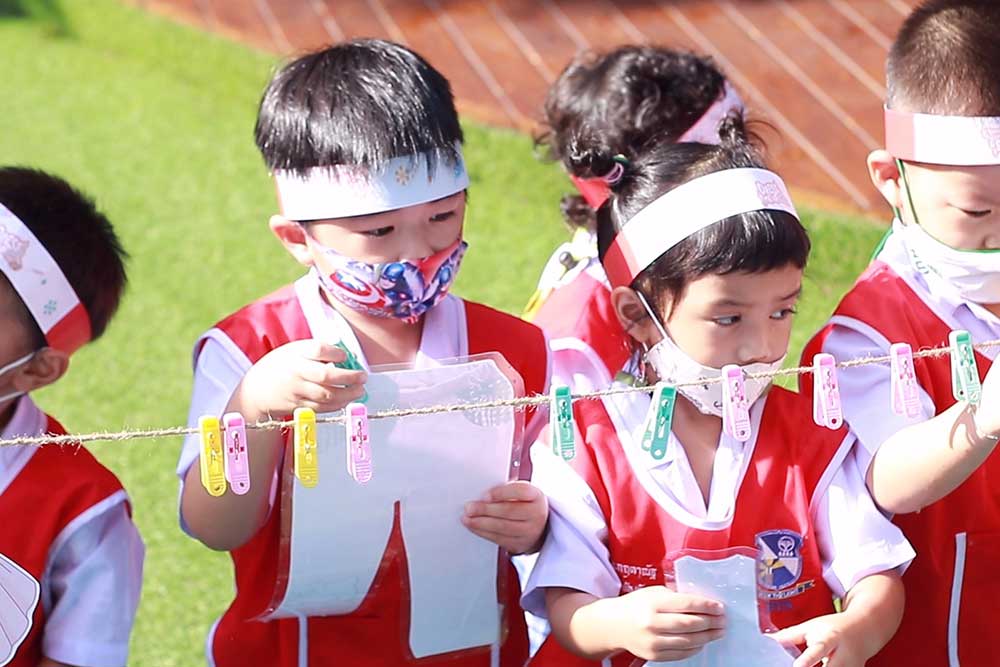
To create environments and learning activities that inspire happiness, enjoyment, and motivation for learning.
To cultivate essential social and emotional skills, enabling children to live harmoniously with others.
To provide activities focused on moral and spiritual growth, fostering self-discipline, self-awareness, and respect for others.
To implement continuous, age-appropriate activities that develop Executive Functions (EF).
To encourage children to create innovations through active learning and hands-on experiences.
To develop children's effective communication skills in listening, speaking, reading, and writing.
To integrate learning activities with culture, the environment, and community resources.
To build collaborative networks with parents and all sectors to support early childhood development.
To nurture age-appropriate life skills, enabling children to care for themselves and solve problems independently.
To develop a flexible management system that responds to individual differences and ensures high-quality educational standards.
To promote student health and well-being through nutritious meals that meet the standards of a Safe Food School canteen (Q Canteen).
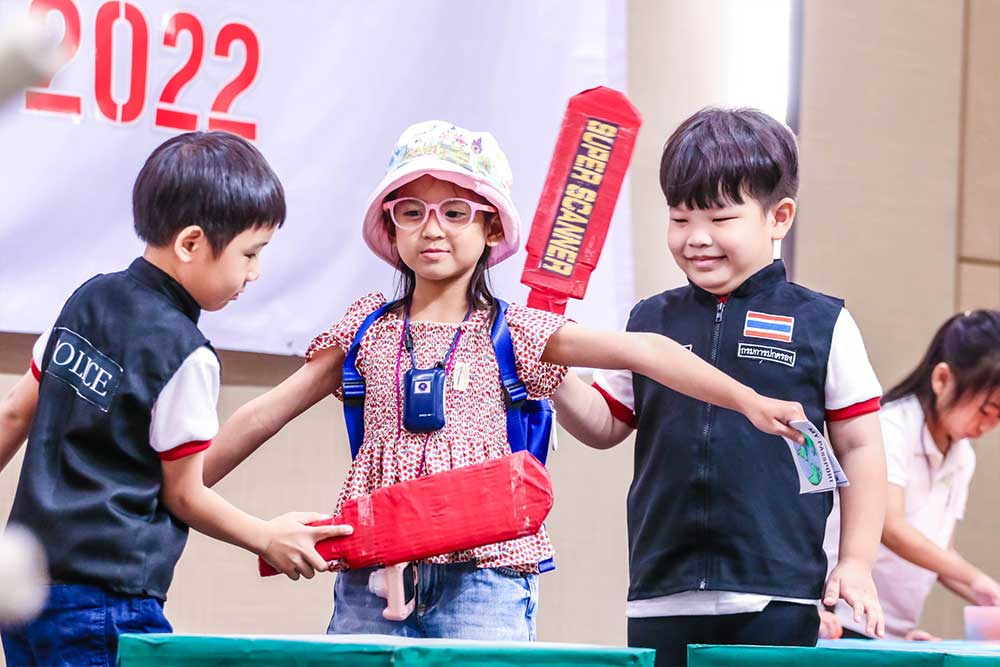
To empower learners with comprehensive, future-ready skills.
To foster continuous, engaging, and real-world connected learning processes that instil a lifelong love of learning.
To cultivate environmental stewardship, resource efficiency, and active participation in sustainable development.
To promote learning and cultural exchange—both Thai and international—fostering harmonious coexistence through mutual respect for diversity.
To develop learners into ethical, morally grounded global citizens who demonstrate social responsibility and a clear awareness of their roles within the global community.
To promote the active participation of parents, the community, and external networks in the holistic development of learners.
To encourage integrated activities and experiences that enhance life skills, adaptability, decision-making, and everyday problem-solving.
To develop a flexible, equitable management system that facilitates learning and responds effectively to learner diversity.